History - It was not until the 19th century that Swedes began to think again about settling in America. In Sweden there had always been a shortage of good land to farm. It was estimated that over 40 per cent of Swedish soil was unproductive. This situation was made worse by an increase in population. One of the main reasons for this was a fall in infant mortality from 21% in 1750 to 15% in 1850. The situation grew worse in the 1850s when Sweden suffered a succession of poor harvests. Unemployment grew and wages fell. This led to a increase in the numbers of people wishing to emigrate. Most of these were bankrupted farmers and out of work agricultural labourers. Only about a quarter of all Swedish emigrants came from towns and cities. (Source)
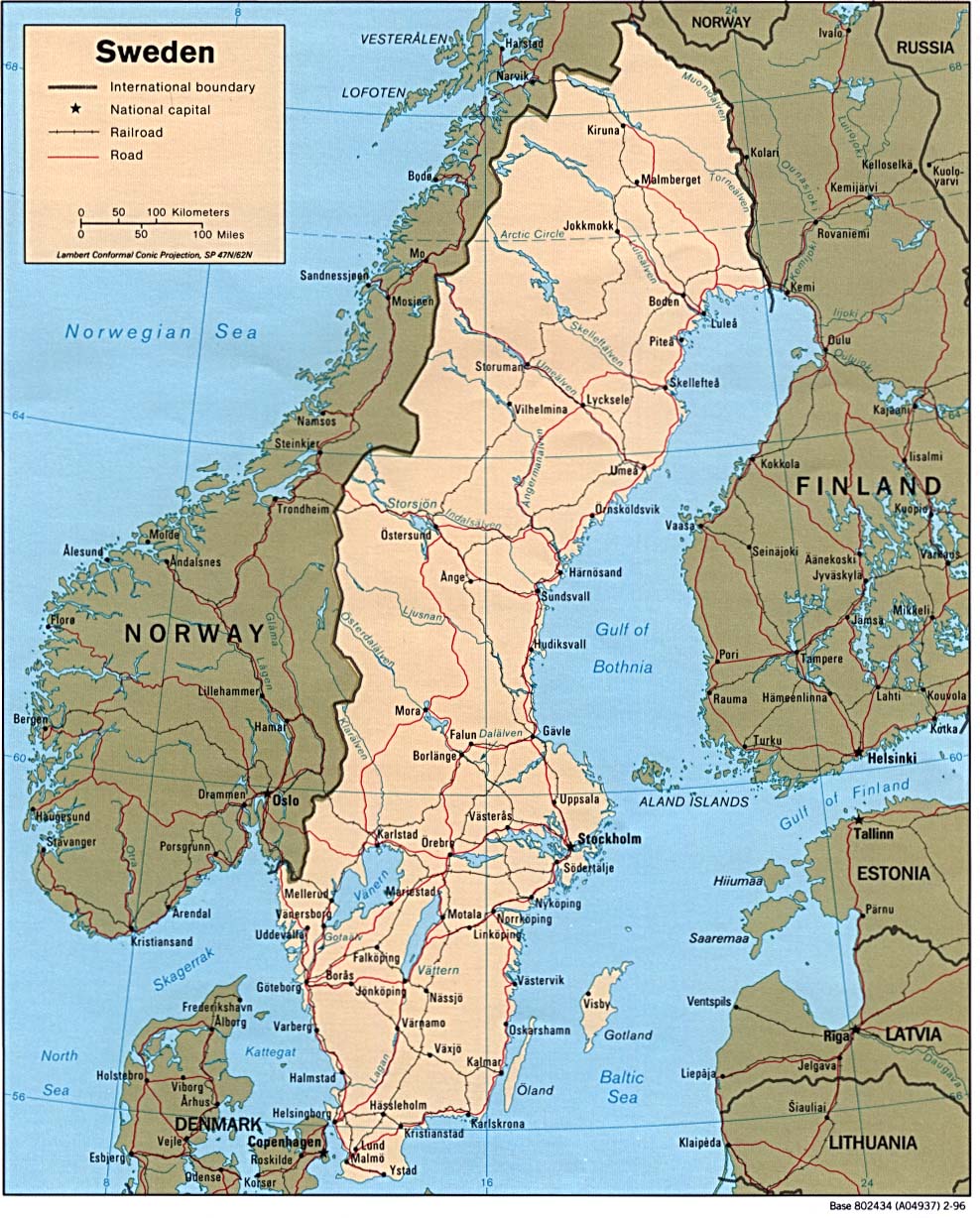
 (Map)
Travel - Swedish immigrants often went to America in ships carrying cargoes of iron to New York. These ships provided cheap passage and would charge only about $12 per person for a trip that usually took about seven weeks. Swedish emigration to the United States was well organized. At New York Harbour the ship was likely to be met by a representative of the Bethel Ship Mission, an organization which helped arrange people to travel west. A report in the New York Times in July, 1851, described immigrants carrying Swedish and American flags, while marching in military fashion to the railroad station.
Immigrants - The first Swedish colony was established by Gustav Unonius in New Upsala, Wisconsin in 1841. The following year Peter Cassel founded New Sweden in Jefferson County. Within a few years there were over 500 Swedish immigrants living in this settlement. Other Swedish colonies were also formed in Swede Point, Iowa (1846) and Andover, Illinois (1849). Minnesota was another popular place to settle and there are over 400 place names of Scandinavian origin in the state.
Adjustment - Swedish immigrants were generally well accepted by mainstream America and tended to blend in easily with their neighbors, especially in the Midwest. Coming from a Protestant, northern European country, the Swedes were seen as desirable immigrants. Overall, they were a literate, skilled, and hard-working group, and found employment on farms and in mines and factories. Young Swedish women were especially sought as domestic servants in American homes. In many areas, especially in the upper Midwest, Swedes settled in close proximity to other Scandinavian and German immigrants. Despite some ethnic frictions, these European immigrants had a dominant influence on the culture and society of the region. (Source)
Clothing - The immigrants did not have a particularly distinctive way of dressing, and generally adopted the clothing styles of their new homeland. Some brought with them the colorful, festive clothing representative of their region of Sweden, but such ethnic costumes were not worn often. The distinctive regional festive dress of nineteenth-century Sweden has, however, been revived by some Americans of Swedish descent, seeking to get in touch with their roots. This dress is sometimes worn for ethnic celebrations or dance competitions. (Source)

Food - Swedish American cooking is quite ordinary; traditional dishes represent the cooking of the Swedish countryside, which is heavily weighted toward meat, fish, potatoes, and other starches. In the area of baked goods, however, Swedish American cooks produce delicious breads, cookies, and other delights. The holiday seasons, especially Christmas, are times for special ethnic dishes such as lutefisk (baked cod), meatballs, and ham, which are arranged on a buffet-style Smorgasbord table, surrounded by mountains of baked goods, and washed down with gallons of strong, thick Swedish coffee. (Source)
Sources
http://www.wisconsinhistory.org/dictionary/index.asp?action=view&term_id=11091&keyword=swedes http://www.spartacus.schoolnet.co.uk/USAEsweden.htm http://www.mnsu.edu/emuseum/history/mnstatehistory/swedish_migration.html http://www.everyculture.com/multi/Sr-Z/Swedish-Americans.html


No comments:
Post a Comment